
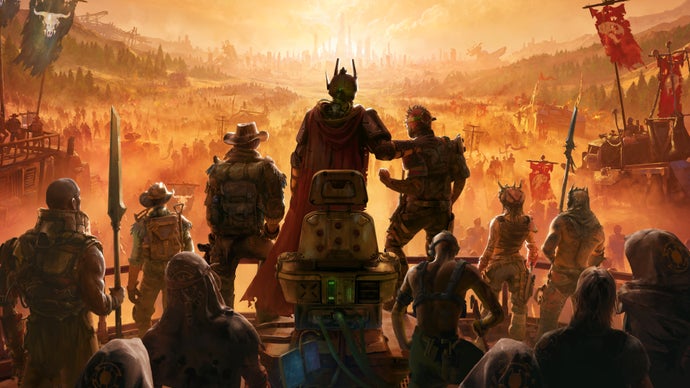
Swedish gaming giant Paradox Interactive has announced Afterworld, marking a significant departure from its established franchise lineup and representing the company’s first original grand strategy setting in over a decade. Following the successful releases of Crusader Kings 3, Victoria 3, and the upcoming Europa Universalis 5, this ambitious new title challenges players to navigate the complexities of civilization rebuilding in a devastated world. The announcement has generated considerable excitement among the dedicated grand strategy community, signaling Paradox’s willingness to explore uncharted creative territory beyond its traditional historical simulation comfort zone.
A Departure From Historical Simulation
For nearly two decades, Paradox Development Studio has built its reputation on meticulously researched historical grand strategy games. Titles like Europa Universalis, Hearts of Iron, and Crusader Kings have become synonymous with deep, complex simulations of historical periods ranging from medieval feudalism to World War II military campaigns. Afterworld represents a fundamental shift in this approach, offering players the opportunity to shape a fictional post-apocalyptic civilization rather than recreating historical events. The last time Paradox ventured into original settings was with Stellaris in 2016, their science fiction grand strategy title that proved enormously successful and demonstrated the studio’s capability to create compelling fictional universes.
The decision to develop an original IP carries significant creative risks but also substantial rewards. Historical titles benefit from built-in player knowledge and expectations, while original settings require developers to establish entirely new lore, mechanics, and world-building from scratch. Industry analysts suggest this move may reflect Paradox’s confidence in their development capabilities and their desire to attract new audiences who might find historical simulations intimidating or less immediately engaging.
Survival and Civilization Building Mechanics
While specific gameplay details remain limited, early information suggests Afterworld will blend traditional Paradox grand strategy elements with survival mechanics appropriate to its post-apocalyptic setting. Players will likely manage resources, populations, and political structures while contending with environmental hazards and competing factions vying for control of remaining habitable territories. This combination of macro-level civilization management with survival elements could create a uniquely tense gameplay experience that distinguishes Afterworld from both traditional strategy games and survival titles.
The grand strategy genre has experienced remarkable growth in recent years, with Paradox leading the charge. Crusader Kings 3, released in 2020, became the company’s fastest-selling game at launch and introduced millions of new players to the intricate world of medieval dynasty simulation. This expanded player base provides Paradox with an excellent foundation for launching experimental new intellectual properties, as established fans are likely to follow the studio into unfamiliar settings based on trust in their design philosophy and quality standards.
Industry Context and Future Implications
Paradox Interactive has faced both triumphs and challenges in recent years. While their core grand strategy titles continue to perform well, some releases have encountered mixed receptions, prompting the company to reassess their approach to game development and post-launch support. Afterworld’s announcement suggests the studio is pushing forward with ambitious projects while applying lessons learned from past experiences. The gaming industry as a whole has seen increased interest in post-apocalyptic settings, from Fallout to The Last of Us, indicating strong market potential for Afterworld’s chosen theme.
The company’s decision to announce Afterworld alongside continued development of established franchises demonstrates a balanced approach to their portfolio. By maintaining beloved series while simultaneously investing in new creative ventures, Paradox positions itself for long-term sustainability in an increasingly competitive market. Fans and industry observers alike will be watching closely as more details emerge about this intriguing new addition to the grand strategy landscape.
Expert Opinion: Afterworld represents a calculated but potentially transformative gamble for Paradox Interactive. By combining their proven grand strategy mechanics with the commercially appealing post-apocalyptic genre, the studio could capture both existing fans and entirely new audiences. If successful, this title may establish a new franchise pillar comparable to Stellaris, diversifying Paradox’s portfolio beyond historical simulation and ensuring their relevance as gaming preferences continue to evolve.


