
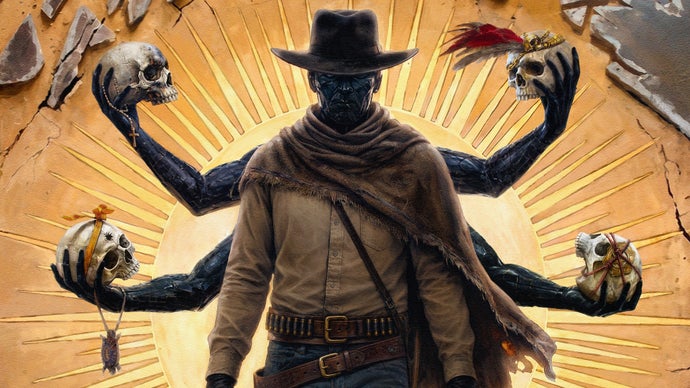
The Soulslike genre has expanded far beyond its medieval fantasy origins, and the upcoming Guns of Eschaton represents one of the most intriguing departures yet. Combining the punishing difficulty and checkpoint-based progression that FromSoftware popularized with atmospheric Weird West aesthetics and first-person shooter mechanics, this new title promises to deliver a fresh experience for fans of challenging games. After recent hands-on time with the game, it’s clear that while Guns of Eschaton offers a genuinely distinct take on familiar mechanics, it also presents a steep learning curve that may test even veteran players.
The game doesn’t currently do an exceptional job of explaining its systems, which contributes significantly to its difficulty. Classic Soulslike elements are present, including the familiar campfire respawn system that has become synonymous with the genre since Dark Souls debuted in 2011. However, translating these mechanics into a first-person shooter framework creates an entirely different gameplay experience that requires players to rewire their expectations. The combination feels unconventional at first, demanding adaptation from both Soulslike enthusiasts and FPS veterans alike.
The Evolution of the Soulslike Genre
Since Dark Souls revolutionized action RPGs over a decade ago, the Soulslike subgenre has proliferated across gaming. Titles like Bloodborne shifted the formula toward faster, more aggressive combat, while Sekiro: Shadows Die Twice introduced precise parrying mechanics set in feudal Japan. More recently, games like Lies of P and Lords of the Fallen have demonstrated that the core Soulslike DNA can be successfully transplanted into various settings and gameplay styles. Guns of Eschaton continues this evolutionary trend by pushing the formula into first-person shooter territory, joining a small but growing category of FPS Soulslikes that includes titles like Remnant: From the Ashes.
The Weird West setting adds another layer of distinctiveness to the experience. This subgenre, which blends traditional Western frontier aesthetics with supernatural, horror, and science fiction elements, has gained popularity in recent years through games like the aptly named Weird West and the tabletop RPG Deadlands. The combination of six-shooters, dusty saloons, and otherworldly threats creates an atmospheric backdrop that sets Guns of Eschaton apart from the dark fantasy settings that dominate most Soulslikes.
Challenging Design Philosophy and Player Experience
The difficulty in Guns of Eschaton appears intentional and philosophically aligned with the Soulslike tradition of teaching through failure. FromSoftware’s games have always been about learning enemy patterns, managing resources carefully, and accepting death as part of the learning process. Translating this philosophy to first-person shooting creates unique challenges, as spatial awareness and aiming precision become paramount in ways they aren’t in third-person action games. Players accustomed to the generous aim assist and regenerating health of modern shooters will find themselves in unfamiliar territory.
The lack of comprehensive tutorials may frustrate some players initially, but this approach mirrors the discovery-based learning that Soulslike fans have come to appreciate. Part of the genre’s appeal lies in uncovering mechanics and strategies through experimentation rather than explicit instruction. Whether Guns of Eschaton strikes the right balance between obscurity and accessibility remains to be seen as development continues, but the foundation for a compelling and unique experience is clearly present.
Looking Ahead to Release
As the gaming industry continues to explore new variations on proven formulas, Guns of Eschaton represents an ambitious attempt to merge distinct gaming traditions. The Weird West aesthetic provides rich visual and narrative possibilities, while the Soulslike framework offers mechanical depth that can sustain long-term engagement. For players willing to embrace its learning curve and accept initial struggles as part of the journey, this title could offer a refreshing alternative to more conventional shooters and Soulslikes alike. The key question is whether the developers can refine the onboarding experience while maintaining the challenging spirit that defines the genre.
Expert Opinion: Guns of Eschaton represents an important experiment in genre hybridization that could influence future game design. If the developers successfully balance accessibility with challenge, this title may establish a new subgenre of first-person Soulslikes with distinct Western horror aesthetics. The game’s success will likely depend on post-launch support and community engagement, as the Soulslike audience has historically embraced difficult games that reward persistence and skill development.


